Sub-Total: $0.00
The Minerals Atlas
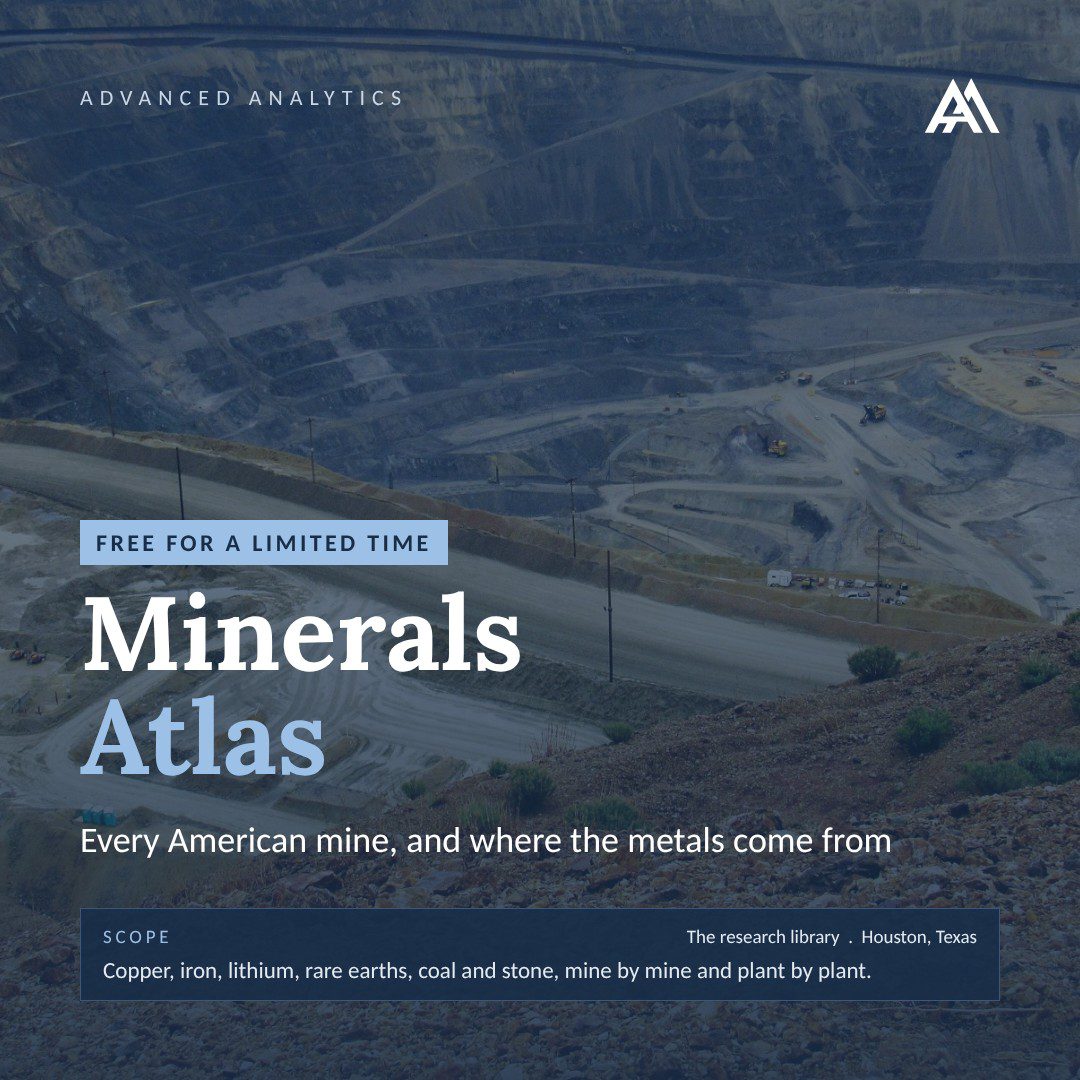
Every American mine, what it digs, who runs it and where, with the smelters and plants that turn ore into metal, the minerals the country imports, and the mines and plants coming. Free to read for a limited time.
Description
The Minerals Atlas covers the American mining industry from the pit to the plant: stone quarries, sand and gravel pits, metal mines, coal mines and industrial minerals, along with the steel mills, smelters, refineries, cement and lime plants that process what is mined. It shows where the mines are, who runs them and how many people they employ, how mining work has changed over a quarter century, which minerals the country imports and from where, who mines the world’s supply of copper, lithium, graphite, rare earths, nickel and cobalt, and the mines and processing plants now in federal permitting or announced.
You get a state by state map of every kind of mine, the largest metal and coal mines, the copper belt and the iron ranges, critical mineral imports and prices, the smelters and alloy plants, the companies behind the mines, and the projects coming, with a mine finder that searches every working mine. It is a web edition you read in your browser, with the full presentation and reference workbook inside, alongside The Power Atlas, The Plant Atlas, The Data Center Atlas, The Earnings Call Atlas and The Value Chain Atlas in the Atlas Series.
Tile photograph: Bingham Canyon Mine, Salt Lake County, Utah, 2019. Farragutful, Wikimedia Commons, CC BY-SA 4.0. Adapted from the original.
Reviews
There are no reviews yet.